Seasonal timing, step-by-step checklist, and when to DIY vs hire a pro
Spring does more than wake up the grass and coax buds onto trees — it also reveals the winter’s mess on your roofline and solar arrays. Leaves, pine needles, pollen, granulated shingle grit, and winter detritus settle into gutters and onto panels during colder months. When spring arrives, a targeted cleanup delivers major benefits: it protects your home from water damage, improves solar generation, and reduces costly repairs later. Below is a practical, search-friendly guide that answers homeowner intent (what to do, when to do it, and how much it costs) while including important longtail and LSI keywords like gutter and solar panel cleaning near me, spring gutter cleaning, solar panel maintenance, solar panel cleaning service, and prevent water damage.
Why spring — not fall or winter — is ideal (short version)
- Winter buildup becomes obvious — frozen gutters, ice dams, and trapped debris are easiest to inspect and address after thaw.
- Rainy season ahead — spring showers test gutters; cleaning before heavy rains prevents overflow and foundation saturation.
- Pollen & sap seasons — early spring pollen and tree sap start coating panels; cleaning early preserves solar panel efficiency.
- Roof repairs & inspections — contractors and cleaning crews are more available in spring than high-season summer (better scheduling for preventive maintenance).
The benefits — concrete and money-saving
- Prevent water damage and foundation problems — clear gutters direct water away from the house and reduce basement leaks.
- Reduce roof rot, mold, and fascia damage — standing water and overflows speed wood decay at eaves and soffits.
- Improve solar output — removing dust, bird droppings, and pollen can recover lost generation; regular panel maintenance preserves warranty conditions.
- Avoid ice dams next winter — cleaning and inspecting gutters helps you find insulation or ventilation problems early.
- Catch small problems before they become expensive — loose hangers, separated seams, and small roof leaks are easier and cheaper to fix in spring.
What to inspect this spring (quick checklist)
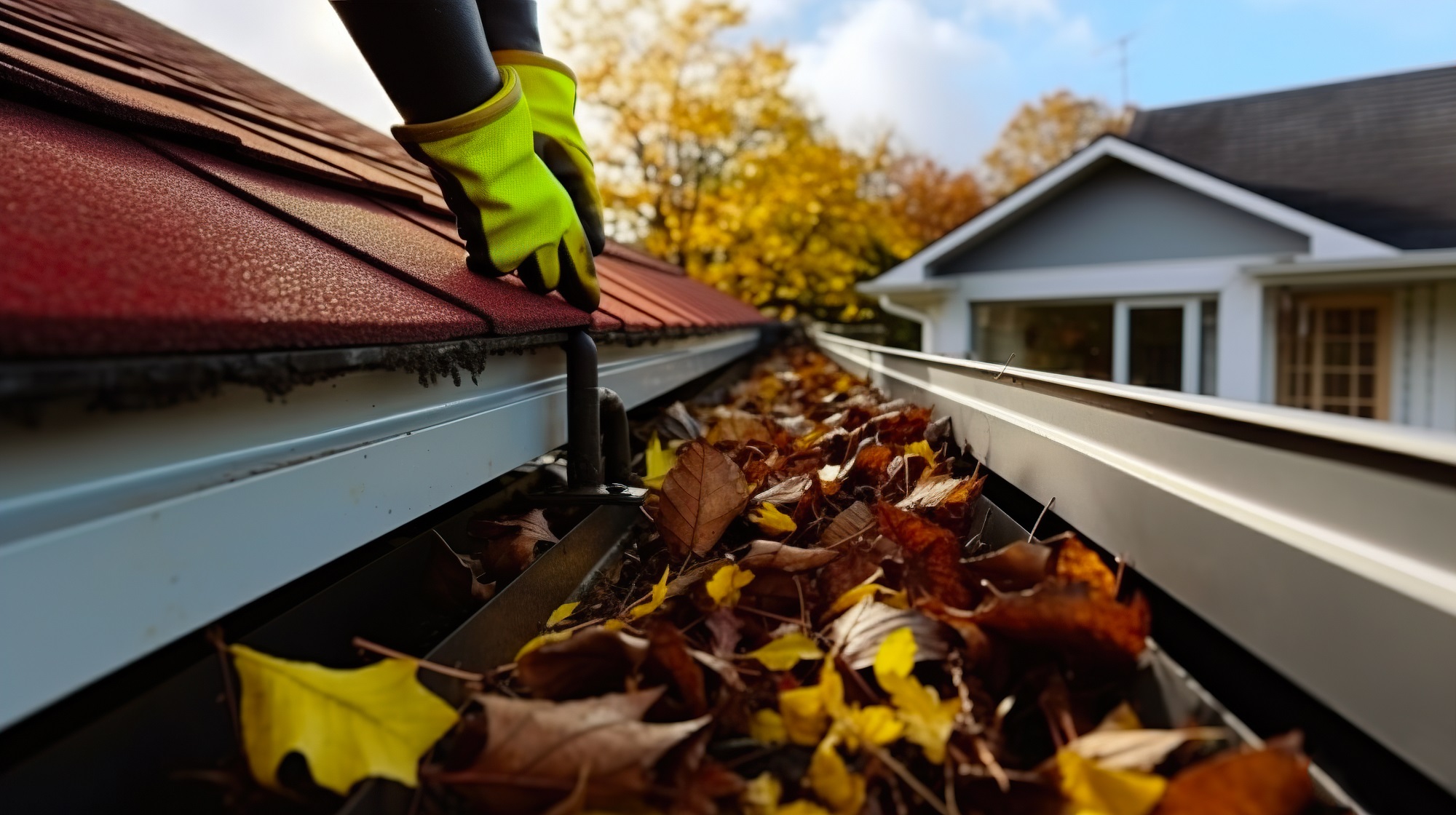
- Gutters: look for debris, sagging sections, and seam leaks.
- Downspouts: ensure they’re clear and discharge 4–6 feet from the foundation (or to a drainage run).
- Roof edge: check for missing shingles, granule loss, or damaged flashing.
- Solar panels: scan for visible dirt, pollen layers, bird droppings, and shading from growing trees.
- Surrounding landscape: trim overhanging branches to reduce future debris and shading.
Use this as a short spring gutter cleaning and solar panel maintenance inspection before deciding on a full clean or a professional solar panel cleaning service.
How to clean — DIY basics and safety
DIY is OK if: gutters and panels are easily reachable from a short ladder, you’re comfortable on ladders, and you have the right tools.
Tools & products to use
- Sturdy ladder with stabilizer
- Gutter scoop or small trowel
- Garden hose with spray nozzle (low pressure)
- Soft, non-abrasive brush or squeegee for panels
- Deionized water or distilled water if you want spot-free results (optional)
- Safety gloves and eye protection
Basic steps
- Remove large debris from gutters by hand with gloves and a scoop.
- Flush troughs and downspouts with a hose to check flow.
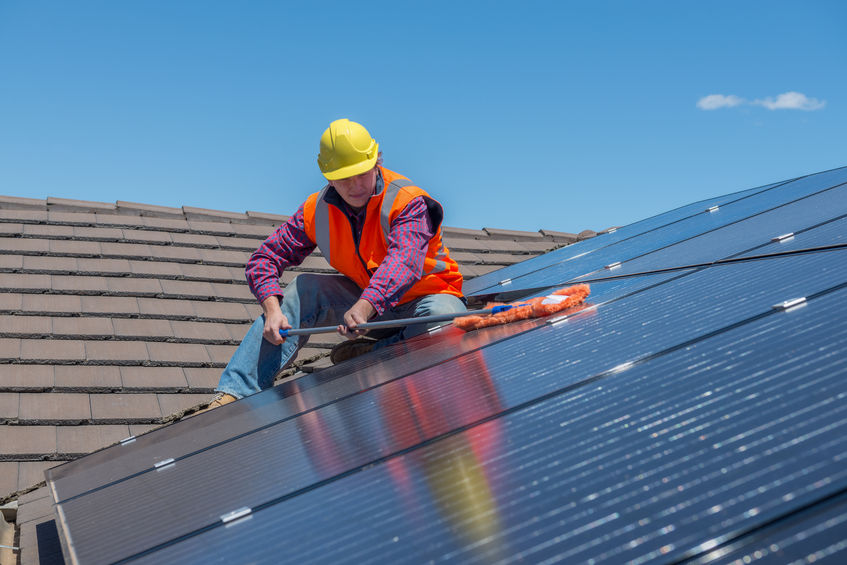
- For panels, rinse with low-pressure water, then gently wipe with a soft brush or microfiber squeegee. Avoid harsh chemicals or abrasive pads.
- Inspect gutters for sagging or detached hangers and repair or mark for pro repair.
- Extend downspouts or add splash blocks to keep water away from the foundation.
Safety notes: Never work on a roof alone. If your roof is steep, high, or slippery, hire professionals. For solar panels, improper pressure or harsh cleaning agents can void warranties or damage anti-reflective coatings.
When to hire a professional (and why it’s often worth it)
Consider a solar panel cleaning service or professional gutter cleaning when:
- Your roof is steep, multi-story, or difficult to access.
- Panels are heavily soiled with bird droppings, tree sap, or industrial dust.
- You want documented panel maintenance for warranty or insurance records.
- You prefer a bundled exterior service (gutter clearing + panel wash + roof inspection) that saves time and identifies hidden damage.
- You live in a dust-prone, coastal, or agricultural area where soiling accumulates quickly.
A pro brings trained crews, safe equipment (water-fed poles, deionized water systems), and the ability to inspect flashing, fascia, downspouts, and panel mounts at the same time. For homeowners searching “gutter and solar panel cleaning near me,” a bundled service can be the most convenient and cost-effective spring solution.
Seasonal schedule — how often to clean (recommended)
- Spring (priority): full gutter clean + visual solar panel inspection and light wash if needed.
- Late summer: quick gutter check after heavy storms; clean panels if dust/pollen season is severe.
- Fall: remove leaves and more thorough gutter cleaning if trees surround the house.
- Winter prep (optional): inspect gutters for secure hangers and clear downspouts to minimize ice dam risk.
If you have trees or live in a dusty coastal/agricultural area, consider quarterly exterior checks and more frequent panel maintenance to maintain solar panel efficiency.
Cost & value — what to expect
- DIY: low direct cost (tools + time), but risk of missed damage or personal injury on ladders.
- Professional gutter cleaning: typical price ranges vary by region and house size; a pro saves time and provides inspection reports.
- Professional solar panel cleaning service: sometimes charged per panel or by system size; larger systems or commercial arrays often see the best ROI.
Economics are location-dependent: in dusty or low-rainfall regions spring cleaning for panels often recovers lost energy more quickly. For gutters, the prevention of water damage and foundation issues usually pays for itself with just one avoided repair.
Eco-friendly cleaning tips (spring-focused)
- Use deionized water for streak-free panel cleaning (no soaps).
- Avoid harsh chemical cleaners that can run into soil and plants.
- Recycle debris removed from gutters (compost leaves; dispose of non-organic debris properly).
- Consider water-saving methods: low-pressure rinses or professional systems that recycle rinse water for large arrays.
Quick spring action checklist (copy/paste)
- Inspect gutters for debris, sagging, and leaks.
- Flush downspouts and confirm 4–6 ft discharge from foundation.
- Rinse solar panels and remove heavy bird droppings or pollen (soft brush).
- Trim branches that cause future shading or debris.
- Schedule professional gutter cleaning or solar panel cleaning service if access/safety is an issue.
- Document any roofline damage and get repair estimates.
Final tip & call to action
Spring is the smartest season to pair gutter care with solar panel maintenance: you fix winter damage, prepare for spring rains, and optimize energy production for the sunny months ahead. If you’d like professional help, a bundled spring service that combines gutter cleaning, downspout extension, and a safe solar panel cleaning service is efficient and often more cost-effective than separate visits.
For trusted, local exterior maintenance and documented panel care, consider a reliable provider like All American Cleaning — they offer seasonal packages, safety-first crews, and free estimates to get your home spring-ready.