
Dirty solar panels are like covered windows: they cannot capture sunlight efficiently. In California, even minor dust, pollen, soot, or bird droppings on panels can reduce energy output by 15–25% or more. In some dusty climates losses are routinely higher. That translates directly into lost savings and slower payback on your solar investment. Large events like wildfire ash can cause dramatic drops in generation, sometimes exceeding 50% until panels are cleaned. In addition, many manufacturers require routine maintenance to keep warranties valid. Every thin layer of grime is a hidden tax on your solar system.
How Dirt and Debris Reduce Efficiency
Particles such as dust, dirt, soot, pollen, leaves, bird droppings, salt and ash act like a sunscreen for panels. They block or scatter sunlight before it reaches the cells, causing power drops. Studies and field reports show that soiling can cut panel efficiency significantly—common losses range from small single-digit percentages in rainy regions up to double-digit losses in dry, polluted, or fire-affected areas. Even passing haze or smoke can reduce generation substantially. These losses are not just statistics: they become real dollars lost each month and year.
As an example, losing 10% output on a typical household system can amount to tens or hundreds of dollars per year, depending on system size and local electricity rates. For commercial-scale systems, the losses scale proportionally and can become large line items in operating budgets. Beyond lost production, neglected panels may contribute to warranty disputes or premature equipment wear if contaminants are abrasive or corrosive.
DIY Solar Panel Cleaning: Tools, Tips and Steps
You do not always need a contractor to wipe off light dust. With care and the right tools, many homeowners can clean panels safely. The essential point is gentle cleaning and risk awareness. Always shut off your solar system at the inverter or main disconnect before beginning any work.
Recommended DIY tools and supplies:
- Soft-bristle brush or flow-through brush attached to a telescoping pole
- Garden hose with adjustable low-pressure nozzle (never a high-pressure washer)
- Mild, pH-neutral soap or a dedicated solar panel cleaning solution
- Microfiber cloths or a squeegee for drying
- Deionized or distilled water for a final rinse to avoid mineral spots
- Sturdy ladder with stabilizer, non-slip shoes, and a partner to spot you
Step-by-step DIY cleaning:
- Shut down the system according to manufacturer instructions.
- Rinse panels gently with low-pressure water to remove loose grit.
- Apply soapy water with a soft brush or sponge, letting stubborn spots soak briefly.
- Gently scrub—do not use abrasive pads or steel wool.
- Rinse thoroughly and squeegee or microfiber-dry to prevent streaks.
- Inspect mounts, wiring and rapid-shutdown devices for visible issues.
Important cautions:
- Never use high-pressure washers or abrasive cleaners—these can crack glass and damage seals.
- Clean when panels are cool (early morning or late afternoon) to avoid thermal stress and rapid evaporation that causes streaks.
- If panels are on steep roofs, multi-story homes, or require walking on roof areas, hire a professional to avoid fall risks and panel damage.
When to Hire a Professional Solar Panel Cleaning Service
Call a professional when:
- Panels are difficult or unsafe to access.
- There is heavy buildup of ash, salt, bird droppings, or baked-on grime.
- You manage a large commercial array or tracking system.
- You want documented before-and-after performance checks or need compliance for warranties or lease agreements.
- You prefer an insured crew to eliminate personal liability.
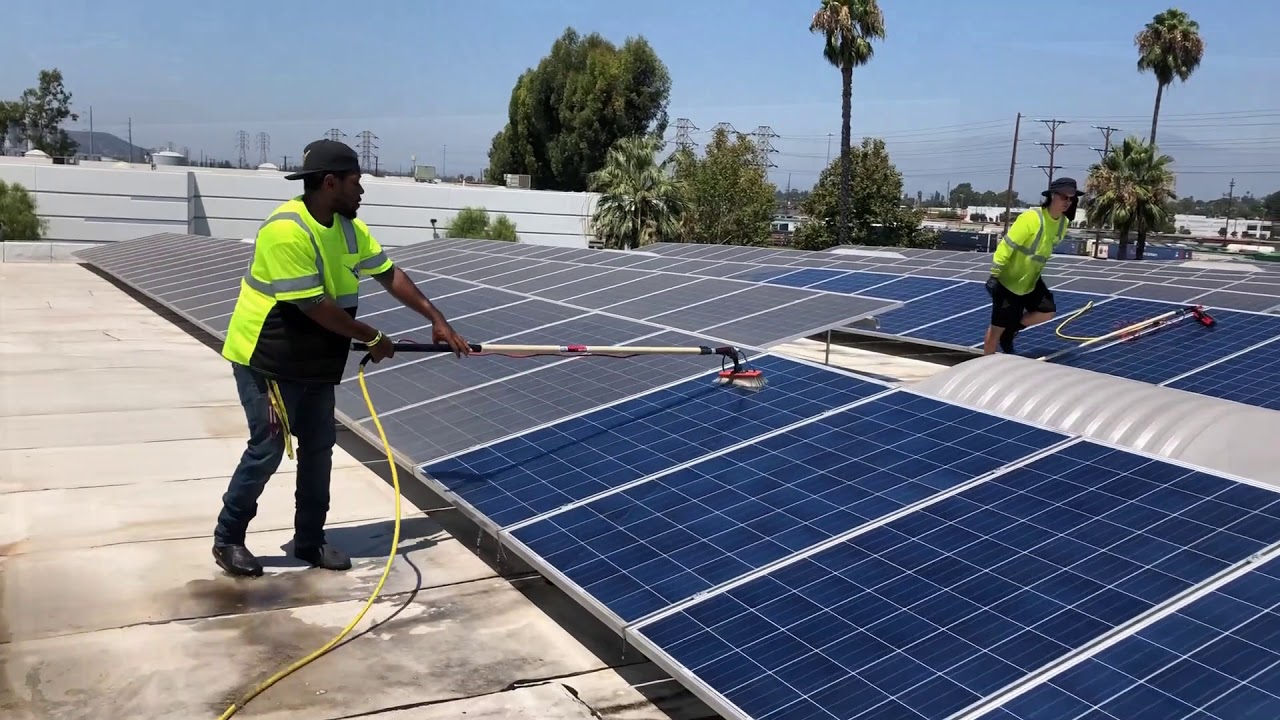
Professional crews bring equipment and expertise: water-fed poles, deionized systems for spot-free rinses, soft-bristle flow-through brushes, fall protection and insurance. They can also bundle solar cleaning with other roofline services—such as gutter cleaning—which reduces repeat ladder trips and provides a coordinated maintenance approach.
Solar Panel Cleaning Service Options and What to Ask
When searching for local help, look for providers that:
- Use non-abrasive cleaning methods and deionized water when possible.
- Provide proof of insurance and a safety program for roof work.
- Offer before-and-after documentation and, where applicable, performance checks.
- Can combine panel cleaning with gutter and roofline maintenance to protect both systems.
Helpful questions to ask a prospective service:
- Are you insured and bonded?
- What cleaning method and water source do you use?
- Will you provide before-and-after photos or a performance readout?
- Do you follow manufacturer recommendations and avoid warranty-voiding practices?
- Can you bundle gutter and solar cleaning on the same visit?
Maintenance Schedule: California Regions and Recommendations
California’s varied climate affects how often you should clean:
- Inland valleys and desert areas (low rainfall, lots of dust/pollen): clean twice per year or more.
- Coastal zones (salt spray and fog): clean every 3–4 months to prevent salt buildup.
- Urban areas (pollution, soot): biannual cleaning is often appropriate.
- Mountain and rural areas (more rainfall): annual cleaning may suffice unless you experience local dust or fires.
- Wildfire-prone areas: add a cleaning immediately after ashfall or heavy smoke events.
Seasonal guidance: spring and fall are practical targets—after pollen season and before the drier, dustier months. Check your inverter output regularly; a persistent drop in daily generation (not explained by weather) often indicates soiling and the need for cleaning.
Safety and Warranty Considerations
Always review your panel and inverter manuals. Some manufacturers provide explicit cleaning instructions and frequency recommendations; following these protects warranty coverage. Avoid walking directly on panels unless the system includes designated walkways. For high or commercial systems, insist on insured, trained technicians who use fall protection and industry-standard procedures.
Cost-Benefit: Why Cleaning Often Pays
A modest cleaning cost can quickly be offset by regained energy production. For residential systems, professional cleanings commonly cost a few hundred dollars and can restore several percent to double-digit percentages of lost output. Over a year or two, the recovered generation often covers the cleaning expense, especially in dust-prone or post-fire scenarios. For commercial operators, maintaining peak output is even more critical to bottom-line performance.
Final Recommendations and Next Steps
- Monitor your solar output data. If you see sudden or persistent drops not explained by weather, schedule an inspection.
- Start with simple DIY cleanings for light dust, using soft tools and low pressure.
- Hire a professional solar panel cleaning service for heavy soiling, hard-to-reach arrays, or when safety is a concern.
- Combine solar cleaning with gutter and roofline maintenance—this coordinated approach prevents dirt from re-depositing on panels and protects your roof and foundation.
- Set a regional cleaning cadence based on your California microclimate and local risks (coastal salt, desert dust, wildfire ash).
Protect your solar investment: clean panels produce more power, save more money, and extend system life. If you need help, consider contacting a local provider that offers both solar and roofline care to maximize results and reduce long-term maintenance time. Book an inspection, get a documented before-and-after report, and start reclaiming the energy—and dollars—your system should be producing.
Also Read: Gutter and Solar Panel Cleaning Near Me: 10 Questions to Ask Before Booking